Annual IATF 16949 & APQP Coaching Case: An Automotive Parts Manufacturer
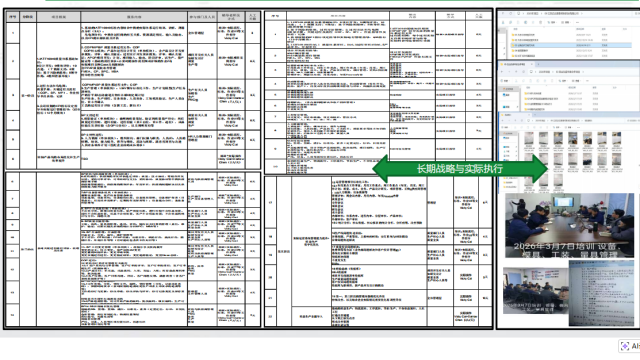
The automotive supply chain imposes some of the strictest quality-system demands in manufacturing: keep IATF 16949 certification to retain supplier status, while surviving multiple second-party audits and VDA 6.3 process audits from OEMs every year. A certificate is not a system — what matters is a management system that runs every day. This case records a twelve-month coaching engagement at an automotive parts manufacturer, showing how we translated system requirements into executable daily management.
Background
The client supplies stamped, welded and assembled parts to several OEMs. Although certified for years, tightening customer audits exposed a persistent “two worlds” problem: the documented system and actual operations diverged, records were rushed before audits and forgotten after. Management realized that without embedding the system into daily operations, both certification and customer trust were at risk — and engaged our consultants for a full-year program.
Diagnosis: Five Core Problems
- System vs. execution gap: the quality manual and procedures had not been revised in years; process definitions no longer matched how the organization actually worked;
- Paper-based APQP: development stages existed on paper but were not enforced; customer milestones and key deliverables were uncontrolled, causing chronic launch issues;
- Disconnected KPIs: business metrics and process performance metrics lived in separate silos; monthly management meetings lacked data and problems surfaced through firefighting;
- Weak supplier management: incomplete approved-vendor list, no special requirements for special-process suppliers (heat treatment, plating), perfunctory performance reviews;
- Poor shop-floor basics: broken identification and batch traceability chains, weak 5S, no FIFO or location management.
Implementation: Four Progressive Phases
Coaching combined classroom training with hands-on project guidance during monthly site visits — every concept was applied directly to the client’s own projects and documents.
Phase 1: System Architecture (approx. 2 months)
- Layered IATF 16949 training from management to process owners, focusing on risk-based thinking and the process approach;
- Turtle diagrams and mapping of COP/MP/SP processes, assigning an owner, inputs/outputs and performance indicators to each;
- Systematic revision of the quality manual, procedures, work instructions and forms so documents described what was actually done.
Phase 2: Core Process Rebuild (approx. 4 months)
- APQP: rebuilt the development process with stage-gate inputs/outputs; on live programs, coached drawing reviews, process flow diagrams, PFMEA, control plans, special-characteristic management, SPC/MSA application and PPAP/PSW completion;
- Suppliers: rebuilt potential-supplier evaluation and approved-vendor governance, added special requirements and audits for special-process suppliers, and instituted monthly/annual performance reviews with a risk-supplier exit mechanism;
- Problem solving & change control: introduced 8D and 5Why with rapid-response mechanisms for internal and customer issues; standardized engineering and 4M change request-review-implementation-verification-lesson workflows.
Phase 3: Performance & Operations Cadence (approx. 3 months)
- Company-level KPIs and QOS operational metrics across quality, cost, delivery, R&D, supply chain and HR, baselined on 12 months of historical data;
- Annual-monthly-weekly planning and a fixed meeting cadence (quality, delivery, project, cost meetings) so management decided on data, not instinct;
- An integrated internal audit program: system audits, process audits, layered audits and product audits.
Phase 4: Shop-Floor Basics & Capability Building (approx. 3 months)
- 5S and visual management: dedicated locations, identification systems and floor boards;
- End-to-end traceability design from incoming batch binding and work-order codes to shipping labels, with FIFO and location management;
- Basic lean concepts plus a kaizen suggestion mechanism, shifting improvement from consultant-driven to employee-driven;
- HR module: skill matrices, competency iteration and coverage plans so the system had capable people to run it.
Results
- Document-versus-reality consistency improved markedly; recertification and multiple OEM on-site audits were passed smoothly;
- APQP programs now run under stage-gate control with visibly shorter launch cycles and far fewer early-production issues;
- The monthly business quality review became standard practice with visible KPI trends;
- An internal team that truly understands the process approach now runs its own audits and continuous improvement.
Key Lessons
The success of system coaching hinges not on the documents but on three connections: requirements to actual work, process KPIs to business KPIs, and knowledge to the client’s own team. We insist the client’s people do the real work on real programs while consultants demonstrate and correct — after a year, what remains is not just documentation but capability.
Related Services
This case belongs to our Quality System & Certification Coaching and Project & Development Quality Management services. Facing a system transition, customer audit or new program challenges? Contact us for a coaching proposal.
Is your company facing similar efficiency and cost challenges?